What AI Interviews Are Really Like (And How to Prepare for Them)
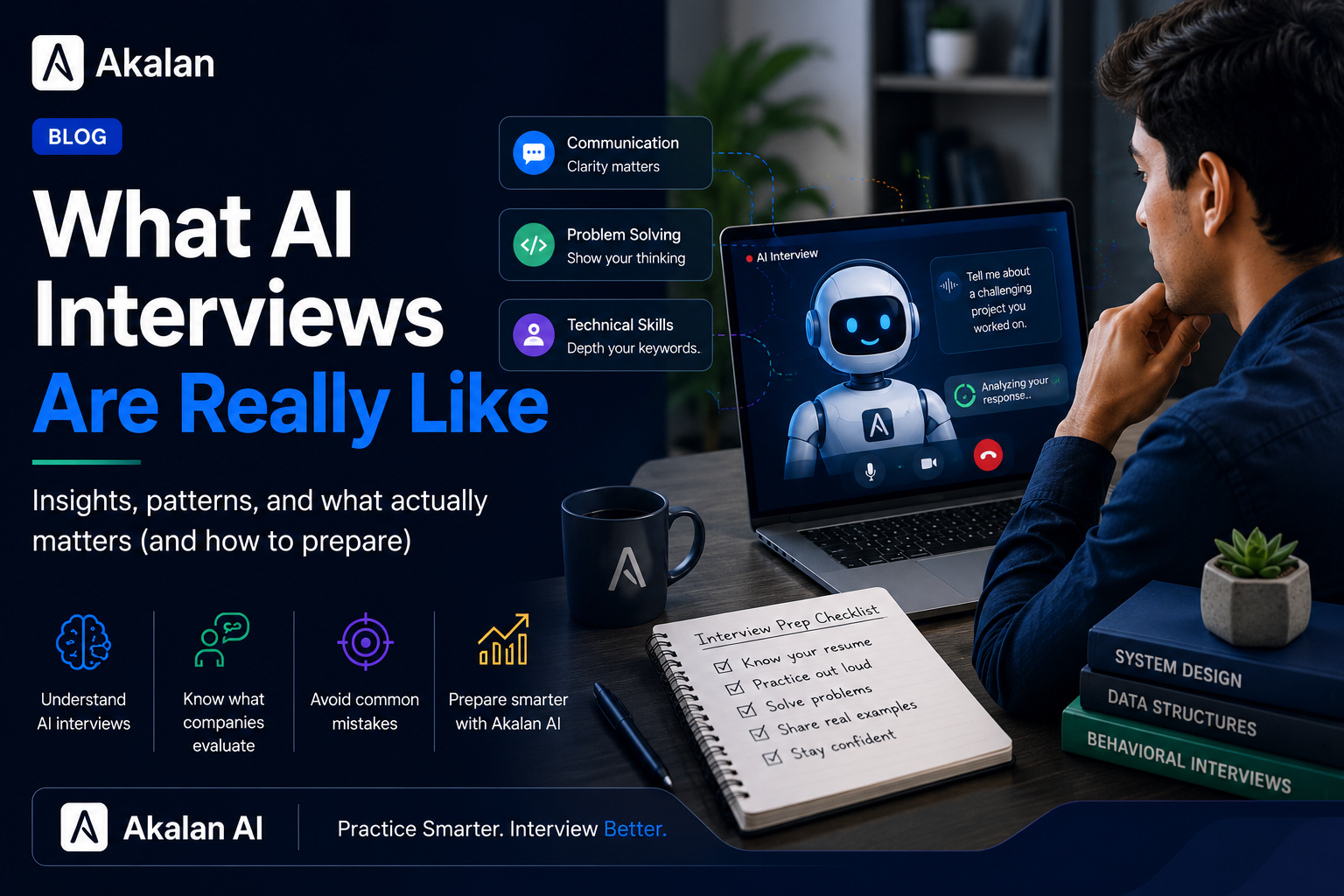
A few years ago, job interviews followed a familiar, predictable pattern: an online coding test, one or two technical rounds, a behavioral discussion, and a final HR chat. Today, many forward-thinking companies have added something new to the mix—the AI interview.
Whether you are applying for a software engineering role, product management, data science, or even customer support, there is a growing chance that your first round won't be with a human recruiter. Instead, you will answer questions from an automated screening system designed to evaluate your communication, technical knowledge, and problem-solving ability.
For many candidates, this shift feels intimidating. But the reality is much simpler than it looks. If you understand exactly what these modern interview platforms evaluate, you can optimize your preparation and perform with absolute confidence.
What Is an AI Interview?
An AI interview uses artificial intelligence to conduct or assist in the initial hiring phases. Depending on the company, it usually involves a mix of:
- Video interviews with automated, real-time follow-up questions
- Voice-based conversations focused on pacing and clarity
- Live coding assessments and technical evaluations
- Scenario-based problem solving against a countdown timer
- Resume-aware questioning that targets your specific past projects
The goal here isn't to replace human recruiters entirely. Instead, AI helps companies screen large numbers of applicants consistently and efficiently. Think of it as an early-stage filter that ensures top candidates move forward to live conversations with hiring managers.
What Companies Actually Evaluate
One common misconception among job seekers is that AI interviews only check whether your answer is technically "correct." In reality, modern screening systems look at the bigger picture:
1. Communication Clarity
Can you explain complex ideas simply? The system analyzes your baseline clarity, response structure, confidence, and how relevant your answer remains to the original prompt. Good communication often matters far more than throwing around complicated technical jargon.
2. Structured Problem Solving
Rather than looking for memorized textbook answers, automated platforms want to understand your core thinking process. Strong candidates excel because they naturally clarify assumptions, break massive problems into smaller pieces, compare multiple solutions, and explain trade-offs.
3. Core Technical Understanding
If you are interviewing for backend or engineering roles, expect the evaluation to target fundamental building blocks like:
- Core Data Structures & Algorithms
- Database Management & APIs
- System Design & Cloud Platforms
- Debugging & Real-World Engineering Decisions
Instead of just reciting definitions, focus on explaining why you chose a particular technical approach over another.
4. Behavioral Skills
Behavioral interviews remain critical—even in automated hiring setups. You should be fully prepared to handle situational prompts like:
"Tell me about a time you faced a difficult project block."
"Describe a conflict you had with a teammate and how it was resolved."
"How do you handle tight deadlines when resources are limited?"
"Tell me about a failure and what you learned from it."
The best way to handle these is to use real, raw experiences and follow a clear layout like the STAR method (Situation, Task, Action, Result).
Common AI Interview Formats
Different corporate teams utilize different digital screening styles:
- One-Way Video Interviews: You receive a prompt on your screen and have a limited countdown timer to prepare before the system automatically records your verbal answer.
- Conversational AI Interviews: The interface actively asks intelligent follow-up questions based on your previous responses, making the experience feel closer to a live, dynamic discussion.
- Resume-Based Testing: The system scans your document and throws personalized prompts based on your listed tech stack, such as:
"You mentioned building a Node.js API with Axios. What was the biggest scalability challenge you faced?"
"Tell us about the database migration project listed on your resume."
This is why every single point on your resume should be something you can confidently explain out loud without looking at notes.
Critical Mistakes Candidates Make
- Cramming and Memorizing Answers: Prepared templates often sound incredibly rigid and unnatural. Screening systems can easily detect when your tone shifts into a robotic reading pattern.
- Giving Long, Unstructured Responses: Instead of speaking for five minutes without direction, start with your main idea, add supporting details, and end with the final outcome.
- Ignoring the "Why": Many candidates focus entirely on what they built. Great candidates explain why they chose the approach, why alternatives were rejected, and how they would improve it today.
- Not Practicing Out Loud: Reading interview sheets silently is not enough. Your mouth needs to get used to speaking the words to improve pacing.
Turning Anxiety into Interview Readiness
Most interview failures happen because candidates lack actual interview experience—not technical knowledge. To bridge this gap, you need an environment that mirrors the exact pressure, layout, and constraints of a real corporate round.
This is exactly why practicing on Akalan is a complete game-changer. By launching a tailored mock track, you face interactive AI interviewers that simulate realistic digital layouts and strict time constraints.
Akalan provides the perfect sandbox to practice answering unexpected questions under pressure, track your filler words, and review your performance structure. It gives you clear, practical insights so you can identify your weak areas and fix them long before a real job offer is on the line.
AI interviews are becoming a standard part of the modern pipeline, but the core qualities they assess remain the same: clear communication, structured thinking, and technical presence. Stop practicing in the dark. Head over to Akalan, start a mock session today, and ensure you walk into your next round completely prepared.